
Pentagon Of Power: The Myth Of The Machine
Lewis Mumford (1974)
 The Myth of the Machine is a two-volume book taking an in-depth look at the forces that have shaped modern technology since prehistoric times. The first volume, Technics and Human Development, was published in 1967, followed by the second volume, The Pentagon of Power, in 1970. The author, Lewis Mumford, shows the parallel developments between human tools and social organization mainly through language and rituals. It is considered a synthesis of many theories Mumford developed throughout his prolific writing career. Volume 2 was a Book-of-the-Month Club selection.
The “pentagon” refers to politics, power (in the sense of physical energy), productivity, profit, and publicity.
Although much of the volume explores the negative influence of centralised power and exploitative behaviour on the human condition, it finishes on a positive and optimistic note in the closing chapters. His final remark is:
“But for those of us who have thrown off the myth of the machine, the next move is ours: for the gates of the technocratic prison will open automatically, despite their rusty ancient hinges, as soon as we choose to walk out.”
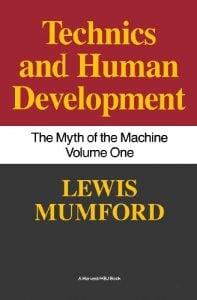 “In The Myth of the Machine, Mumford insisted upon the reality of the megamachine: the convergence of science, economy, technics and political power as a unified community of interpretation rendering useless and eccentric life-enhancing values. Subversion of this authoritarian kingdom begins with that area of human contact with the world that cannot be successfully repressed – one’s feelings about one’s self.”
 The Society of the Spectacle (French: La société du spectacle) is a 1967 work of philosophy and Marxist critical theory by Guy Debord, in which the author develops and presents the concept of the Spectacle.
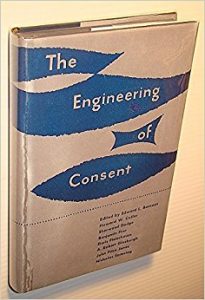 In his own words, Bernays describes engineering consent as “use of an engineering approach—that is, action based only on thorough knowledge of the situation and on the application of scientific principles and tried practices to the task of getting people to support ideas and programs.”
 Technics and Civilization is a 1934 book by American philosopher and historian of technology Lewis Mumford. The book presents the history of technology and its role in shaping and being shaped by civilizations. According to Mumford, modern technology has its roots in the Middle Ages rather than in the Industrial Revolution. It is the moral, economic, and political choices we make, not the machines we use, Mumford argues, that have produced a capitalist industrialized machine-oriented economy, whose imperfect fruits serve the majority so imperfectly.